How to Stop Late-Night Snacking (Psychological Tricks That Actually Work)
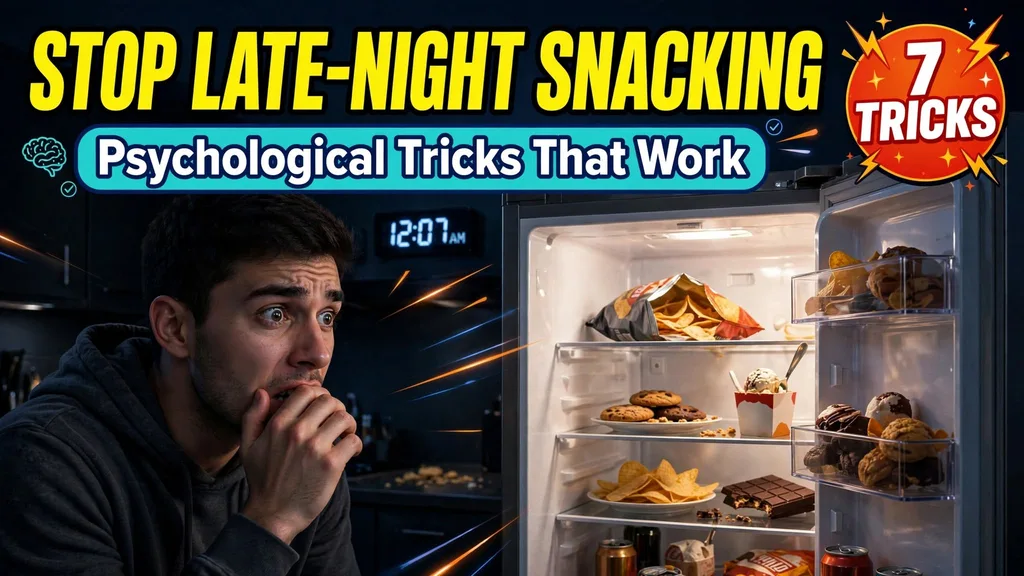
Introduction
You had a balanced dinner. You’re not physically hungry. Yet somehow, at 10 p.m., you find yourself standing in front of the fridge, reaching for something—anything—to eat.
Sound familiar? You’re not alone. Late-night snacking is one of the most common struggles people face, and it’s rarely about actual hunger. The truth is, nighttime eating is often driven by your brain, not your stomach . And here’s the good news: understanding the psychology behind this habit is the first step to breaking it for good.
In this guide, we’ll debunk common myths about late-night snacking, explain why your brain drives you to the kitchen after dark, and give you psychological tricks that actually work—no willpower battles required.
Myth 1: Late-Night Snacking Always Leads to Weight Gain
Many people believe that eating at night automatically causes weight gain. But research shows that no direct correlation exists between eating late and gaining weight .
The Truth: Weight gain happens when you consistently consume more calories than your body needs—regardless of the time of day. The problem isn’t the clock; it’s often the kind of foods people reach for late at night (usually calorie-dense, highly processed options) and mindless overeating .
While eating late can affect hunger hormones and metabolism, the habit itself isn’t the villain—it’s the pattern behind it .
Myth 2: Late-Night Snacking Means You Lack Willpower
It’s easy to feel ashamed when you can’t resist the midnight munchies. But nighttime snacking doesn’t happen simply because you lack willpower—many factors, including calorie deprivation during the day, can play a role .
The Truth: Willpower is a limited cognitive resource, and by 9 p.m., yours is likely spent. Research shows that traditional diet strategies fail specifically because they depend on cognitive control to override reward-based learning—a fight your brain will lose, especially at the end of a long day .
Nighttime eating is driven by deeply wired habit loops, not a character flaw. Understanding this is the first step toward self-compassion and real change .
Myth 3: You Should Just Stop Eating After Dinner—No Exceptions
Viewing meals and snacks as “good” or “bad” is rarely helpful in cultivating a healthy relationship with food .
The Truth: If you’re truly hungry late at night, eating a small, balanced snack is perfectly fine—and sometimes necessary. Depriving yourself when you’re physically hungry can lead to binge eating later on . The key is distinguishing between genuine physical hunger and emotional or habitual urges.
Why Your Brain Drives You to the Kitchen at Night
The Habit Loop: Trigger → Behavior → Reward
Late-night snacking follows a predictable pattern called a habit loop:
- Trigger: End-of-day stress, boredom, loneliness, exhaustion, or the act of sitting down and scrolling on your phone
- Behavior: Walking to the kitchen and eating—usually comfort food high in sugar, salt, or fat
- Reward: Temporary relief, a brief numbing of whatever feeling you were trying to escape
Your brain logs this sequence. Stress → eat → feel better (briefly). Each time you repeat it, the neural pathway gets stronger. After weeks, months, or years, the behavior becomes automatic. You don’t decide to eat at night—the habit decides for you .
Stress, Anxiety, and the Evening Vulnerability Window
Think about what happens to your stress levels over the course of a day. In the morning, you’re in motion—tasks, responsibilities, forward momentum. You don’t have time to feel your feelings .
By evening, the distractions stop. And all the stress, worry, and unprocessed emotion from the day surfaces. Your brain, now depleted of cognitive resources, defaults to its most practiced coping mechanism: for many people, that’s food .
Research confirms that chronic stress drives food cravings (particularly for high-fat, high-sugar foods), and these cravings function as a mediating pathway between stress and weight gain. The evening hours represent the highest-risk window for this cycle .
This is why nighttime eating is so often about emotional needs, not hunger .
Psychological Tricks That Actually Work
1. Use the “Delay, Distract, Decide” Strategy
When the urge to snack hits, don’t fight it head-on—buy yourself time. This technique, sometimes called “urge surfing,” is a proven way to break impulsive eating .
Step 1: Delay. Put off deciding about eating for 10-15 minutes. Set a timer if helpful. This stops you from acting impulsively on the urge .
Step 2: Distract. Find an easy, non-food activity to shift your focus. Ideas include:
Step 3: Decide. After the timer goes off, check in. Has the urge passed? If not, you can choose to eat intentionally—but now it’s a conscious decision, not an impulse .
Most cravings subside in under 10 minutes .
2. Practice the “STOP” Method
When you find yourself reaching for the fridge, slow down with this four-step process taught at the Benson-Henry Institute for Mind Body Medicine:
- Stop: Consciously call a time-out
- Breathe: Take a few deep breaths to relieve tension
- Reflect: Ask yourself why you feel the urge to eat right now
- Choose: Decide how to handle the urge. Could you satisfy it in another way?
3. Create a Physical and Mental Barrier
Brush your teeth immediately after dinner. This signals to your body that eating is done for the night. The minty taste also makes food less appealing .
Close the kitchen. If possible, close the kitchen every night after dinner. Start with one or two nights a week, or work backward hour by hour from your bedtime—close the kitchen by 10 p.m. if you go to bed at 11 .
Try the “get naked” trick. Snacking is easier when your body is buried in PJs. Before starting an eating spree, force yourself to strip down—it creates an inconvenient barrier to mindless eating .
4. Replace the Habit, Not Just the Food
The goal isn’t to white-knuckle through cravings—it’s to replace the old habit loop with a new one that actually processes feelings .
Find a new wind-down ritual. Instead of heading to the kitchen, try:
Keep your hands busy. Filling your house with music at night may keep you feeling more active and less like vegging out and eating. Making music also keeps your hands occupied .
Use aromatherapy. Research shows that burning aromatic candles or incense can turn your appetite off (avoid chocolate and vanilla aromas). Lavender under your pillow can help with relaxation .
5. Tackle Emotional Eating at the Root
If you’re eating to cope with stress, anxiety, or loneliness, food is a temporary bandage—not a solution .
Try a “self-hug” touch routine. A simple self-regulation practice like placing your hands on your heart or hugging yourself can lower craving intensity without restriction .
Ask: “What am I really feeling?” Cravings feel physical, but if you’ve already eaten enough, the urge is often emotional. Treat urges like data—ask what emotion is driving this right now .
Keep a food journal. Writing down upsetting or stressful situations may help you recognize when you’re more likely to snack emotionally late at night .
6. Fix Your Day to Fix Your Night
Sometimes, the best way to stop nighttime eating is to change what happens during the day .
Eat regular meals. Skipping meals, especially breakfast, sets you up to overeat later. A registered dietitian compares breakfast to fuel for a car—eventually, without proper fuel, you’ll crash and scarf down anything in sight .
Get enough protein. Protein helps you feel fuller for longer and supports craving management. Aim for 30g of protein per main meal and 10-15g per snack .
Drink water throughout the day. Thirst is easily confused with hunger. Try drinking 2-3 liters daily .
Get enough sleep. Too little sleep disrupts appetite-regulating hormones and leads to overeating .
7. The Power of Curiosity Over Shame
Self-criticism fuels the binge-shame-repeat cycle. Instead, approach cravings with curiosity .
When you feel the urge, ask yourself:
- What’s the trigger right now?
- Am I actually hungry, or am I trying to feel something different?
- What would happen if I waited five minutes?
Progress looks like urges getting quieter, faster recovery after stress, and calmer decision-making around food—not perfection .
If Hunger Is Real: Smart Late-Night Snacking
Sometimes, you genuinely need to eat at night. If you’re truly hungry, choose wisely:
- Protein + fiber combo: Banana with peanut butter, a handful of nuts and a cheese stick, or vegetables with hummus
- Small portions: If you decide to snack, portion out what you want and put the rest away. Eat at the table, not in front of the TV
- Avoid refined carbs and sugars: These can spike blood sugar and disrupt sleep
Remember: depriving yourself when truly hungry can lead to binge eating later .
When to Seek Professional Help
If you consistently wake up at night to eat, consume 25% or more of your daily calories after dinner, or feel distressed about your nighttime eating, you may be dealing with night eating syndrome (NES)—a condition affecting about 1.5% of the U.S. population .
NES is characterized by:
- Eating 25% or more of daily calories after dinner
- Waking up at least twice at night to eat
- Regular food limitation during the day
- Poor sleep and mood disorders
This condition may require professional treatment, including cognitive behavioral therapy (CBT) or medication. Consult a healthcare provider if the behavior disrupts your sleep or mental health .
Conclusion
Late-night snacking isn’t a moral failing—it’s a habit your brain learned to help you cope with stress, boredom, or unmet emotional needs. Breaking the cycle doesn’t require superhuman willpower. It requires understanding how the habit works and replacing it with strategies that actually address the root cause.
Start with one psychological trick from this guide. Try it for a week. Be kind to yourself when it doesn’t work perfectly. And remember: progress looks like quieter urges, not perfection.
For more insights on building healthier relationships with food, explore our guide on mindful eating techniques or the science behind breaking food habits.
FAQs
Q: Is it bad to eat before bed?
A: Not necessarily. If you’re genuinely hungry, a small protein-rich snack is fine. However, eating heavy meals close to bedtime can disrupt digestion and sleep quality .
Q: Why do I crave sugar at night?
A: Late-night sugar cravings often stem from emotional needs—stress relief, comfort, or habit—rather than true hunger . Daytime eating patterns (like not eating enough protein or skipping meals) can also contribute .
Q: Can drinking water stop late-night cravings?
A: Sometimes! Thirst is easily confused with hunger. Try drinking a large glass of water and waiting 10 minutes to see if the craving subsides .
Q: How long does it take to break a late-night snacking habit?
A: Forming or breaking a habit can take, on average, 66 days. Consistency and self-compassion are more important than speed .
Q: Should I see a doctor about nighttime eating?
A: If you regularly wake up to eat, eat more than 25% of your daily calories after dinner, or feel distressed about your eating patterns, consult a healthcare provider