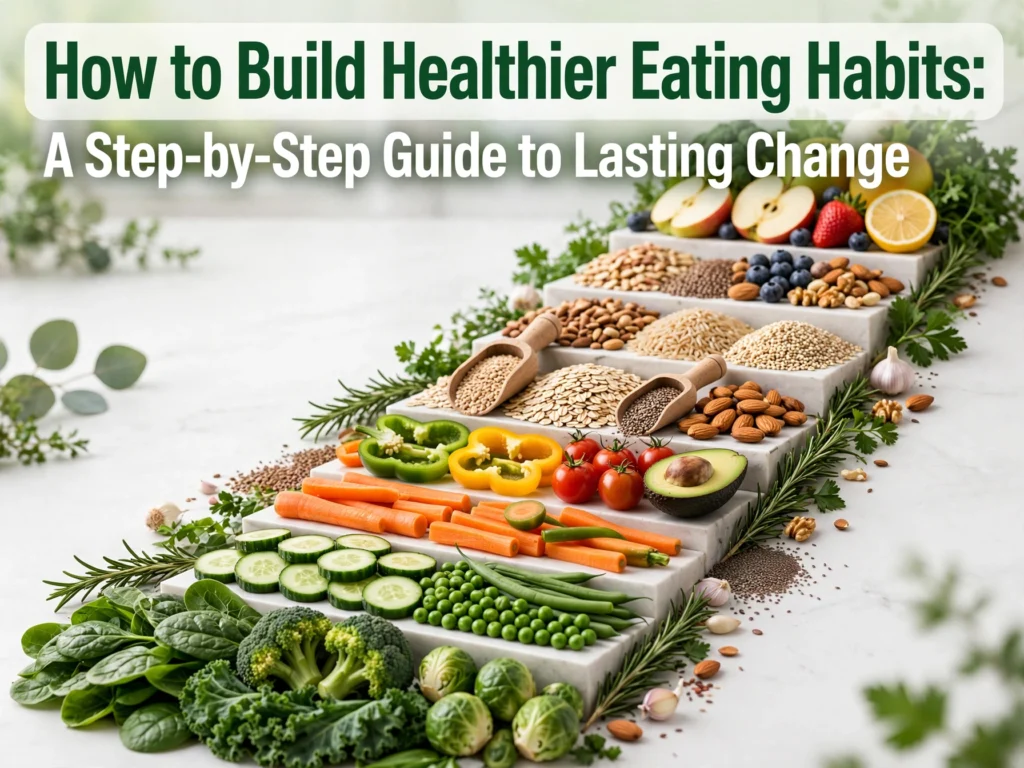
How to Build Healthier Eating Habits: A Step-by-Step Guide to Lasting Change
Let’s be brutally honest for a .
If you are reading this, you have probably tried to “eat healthier” before. You bought the kale. You prepped the mason jars. You told yourself, “This time, I’m going to be perfect.” And then, three days later, you found yourself standing in front of the fridge at 10 PM, eating cold pizza with your bare hands, wondering where it all went wrong.
Here is the truth that no fitness influencer will tell you: Building healthier eating habits isn’t about willpower. It isn’t about being “perfect.” And it absolutely isn’t about starving yourself.
It is about redesigning your environment, reprogramming your cravings, and making small, boring changes that compound over time. Think of it like building a house. You don’t start with the roof; you start with a solid foundation.
This guide is that foundation. No gimmicks. No expensive powders. Just a step-by-step, human-friendly roadmap to eating food that makes you feel alive.
Step 1: Stop “Dieting” and Start “Eating for Energy”
The first and most important mental shift is this: You are not on a diet. You are on a lifelong relationship with food.
When you say “I’m on a diet,” your brain hears “I am temporarily depriving myself.” That triggers a scarcity mindset, which leads to bingeing and guilt.
Instead, shift your goal to energy and performance. Ask yourself: “Does this food give me steady energy for the next three hours, or will it make me crash?” When you start viewing food as fuel for your brain, your workouts, and your mood, the choices become obvious. You don’t eat broccoli because you “have to”; you eat it because you want to feel sharp and focused.
Step 2: Master the “Plate Formula” (No Measuring Cups Required)
Forget calorie counting for a moment. The easiest way to build a healthier plate is to use your eyes and your hands.
Imagine your dinner plate is divided into three sections:
- ½ of your plate: Non-starchy vegetables (leafy greens, broccoli, bell peppers, zucchini, cauliflower). These are packed with fiber, water, and micronutrients that fill you up without weighing you down.
- ¼ of your plate: Lean protein (chicken breast, fish, eggs, tofu, beans, or lentils). Protein is the building block of muscle and the key to feeling full and satisfied after a meal.
- ¼ of your plate: Complex carbohydrates (brown rice, sweet potatoes, quinoa, whole-wheat pasta, or oats). These give you the slow-burning fuel you need to power through your day.
That’s it. You don’t need a food scale. You don’t need a tracking app. Just visually divide your plate, and you are already eating better than 80% of the population.
Step 3: Rebuild Your Kitchen (The “Out of Sight, Out of Mind” Rule)
Here is a psychological reality: You will eat what is easily accessible.
If you have a bag of chips sitting on your kitchen counter, you will eat it. If you have a bowl of apples on the counter, you will eat that instead. It is not a moral failing; it is human nature.
The Kitchen Reset:
- Clear the front of your fridge and pantry: Put all the processed snacks, sugary cereals, and sodas on the highest shelf or in the back. Make them hard to reach.
- Move healthy food to eye level: Wash and chop your vegetables as soon as you get home from the grocery store. Put them in clear glass containers at eye level in the fridge. When you open the door, they are the first thing you see.
- Prep your snacks: Portion out servings of nuts, seeds, and fresh fruit into small baggies. When you are hungry and rushing out the door, grab one of those instead of a vending machine candy bar.
Your environment dictates your habits. Make the healthy choice the easiest choice, and your body will naturally follow.
Step 4: The Fiber “Sneak Attack” (How to Eat More Without Noticing)
Fiber is the unsung hero of a healthy diet. It lowers cholesterol, stabilizes blood sugar, and keeps your digestive system running like a well-oiled machine. But most people eat less than half of what they need.
Instead of forcing yourself to eat a giant bowl of kale, try these “sneak attack” methods to boost your fiber intake without tasting a difference:
- Blend it in smoothies: Throw a handful of spinach or a tablespoon of ground flaxseed into your morning smoothie. You won’t taste it, but you will add 5–8 grams of fiber instantly.
- Swap your white flour: When baking or cooking, replace 25% of your white flour with whole-wheat flour or oat flour. It adds a nutty flavor and massive fiber boost.
- Add beans to everything: Canned black beans, chickpeas, or lentils can be tossed into soups, salads, tacos, and even pasta sauces. They absorb the surrounding flavors and bulk up your meal cheaply and healthily.
- Top it with seeds: Sprinkle chia seeds, pumpkin seeds, or hemp hearts over oatmeal, yogurt, or roasted vegetables. They add crunch and fiber with zero effort.
Step 5: Tame Your Sugar Cravings (Without White-Knuckling It)
Let’s address the elephant in the room: Sugar is addictive. When you cut it out cold turkey, your body rebels, and you end up binge-eating a pint of ice cream at midnight.
Here is a more realistic approach: Downshift, don’t quit.
- Week 1: If you drink three sodas a day, drop it to two.
- Week 2: Swap one soda for a sparkling water with lime.
- Week 3: Swap the second soda for a green tea or unsweetened iced tea.
By slowly reducing, your taste buds have time to adjust. Within 30 days, you will find that the sugary drink you used to love now tastes overwhelmingly sweet.
Also, never fight a craving on an empty stomach. If you are craving sugar, eat a balanced meal with protein and fiber first. Many times, your brain is just confused and actually needs real fuel, not a sugar spike.
Step 6: The “First Bite” Rule for Portion Control
Restaurants and even home-cooked meals often serve portions that are 2–3 times larger than what your body actually needs.
Use this simple trick: Serve yourself your normal portion. Then, remove 20% of it and put it in a container for leftovers.
That 20% is usually the extra calories that push you from “satisfied” to “uncomfortably stuffed.” By eating 80% of your portion, you give your brain time to register fullness. It takes about 20 minutes for your stomach to signal your brain that you are full. If you eat slowly and put your fork down between bites, you will naturally stop eating before you overdo it.
Step 7: Make Your Hydration Work for You
We talked about hydration before, but let’s connect it to eating habits. Thirst is often mistaken for hunger.
The next time you feel a sudden urge to snack, drink a tall glass of water first. Wait 15 minutes. If the craving disappears, you were just dehydrated. If you are still hungry, eat a small snack like an apple or a handful of almonds.
Also, drinking a glass of water 30 minutes before a meal naturally reduces your appetite, helping you eat slightly smaller portions without feeling deprived.
Step 8: The “80/20” Rule for Sanity
Here is the most important step of all: Build in flexibility.
No one eats perfectly every single day. Life happens. Birthdays happen. Pizza nights happen.
Adopt the 80/20 rule: 80% of your meals should be nutrient-dense, whole foods that fuel your body. The other 20% of the time? Enjoy that slice of cake. Eat that burger. Savor that glass of wine.
Why does this work? Because when you know you are allowed to indulge 20% of the time, you don’t feel deprived. You don’t rebel. You don’t feel guilty. You eat a treat, enjoy it, and move on. That lack of guilt is what actually makes healthy eating sustainable for the long term.
Your 4-Week Action Plan (Start Tomorrow)
If you are feeling overwhelmed, don’t try to do all eight steps at once. Here is a gradual, 4-week plan to ease into it:
| Week | Focus Area | Small Action |
|---|---|---|
| Week 1 | The Plate Formula | Spend 5 minutes practicing the ½ veggie, ¼ protein, ¼ carb rule at dinner. |
| Week 2 | The Kitchen Reset | Move unhealthy snacks to the back and place fresh fruit and veggies in clear containers at eye level. |
| Week 3 | Fiber Boost | Add one extra serving of beans, seeds, or whole grains to your daily meals. |
| Week 4 | The 80/20 Mindset | Allow yourself one guilt-free “treat meal” this week. Notice how it doesn’t derail your progress. |
The Bottom Line: It’s Not About Perfection. It’s About Direction.
Building healthier eating habits is not a race. It is a slow, steady walk toward a better version of yourself.
You will have days where you eat perfectly. You will have days where you eat a bag of chips for dinner. Both are okay. What matters is the average. Over time, if you make the healthier choice 80% of the time, your body will reward you with better sleep, clearer skin, more energy, and a stronger immune system.
So, give yourself grace. Start with just one small change this week—maybe it is adding a side of vegetables to your lunch, or swapping your afternoon soda for a cold glass of water.
Small wins compound. And before you know it, eating healthy won’t feel like a chore anymore. It will just feel like… you.
Now, go make your plate. You’ve got this.