How to Fix a Flat Butt from Sitting All Day: Glute Exercises for Strength and Shape
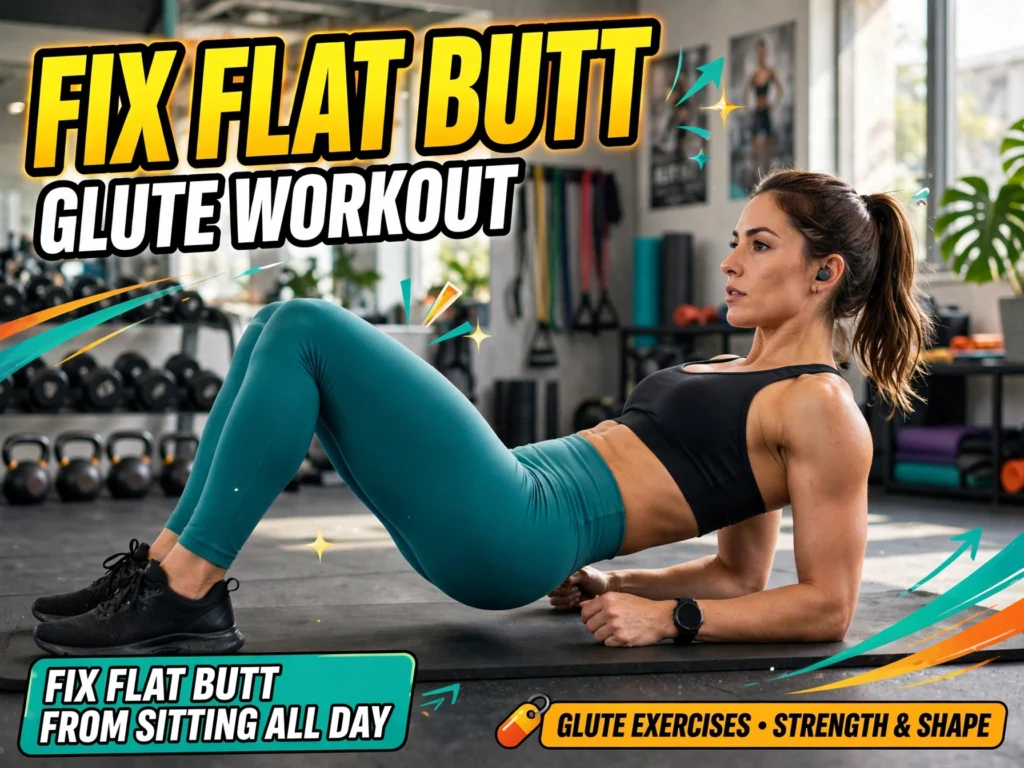
If you spend most of your day in a chair, your glutes might be paying the price. That flat, deflated look in the mirror? It’s not just about aesthetics — it’s a sign that your glute muscles have essentially gone to sleep. The good news? You can wake them up, rebuild their shape, and even improve your posture in the process.
Let’s break down why sitting wrecks your glutes and, more importantly, what you can do about it.
Why Sitting Destroys Your Glutes (And Your Posture)
Your glutes are the largest and most powerful muscle group in your body. They’re designed to keep you upright, propel you forward, and stabilize your hips and lower back. But when you sit for hours on end, a few things go wrong:
1. Glute Amnesia
Sitting puts your hips in a flexed position for long periods. Your glutes are stretched and underused, so your brain literally forgets how to activate them. This phenomenon — sometimes called “gluteal amnesia” or “dead butt syndrome” — means your glutes stop firing properly even when you try to use them.
2. Hip Flexor Tightening
While your glutes go dormant, your hip flexors (the muscles at the front of your hips) tighten and shorten. This pulls your pelvis into an anterior tilt — hello, lower back arch and protruding belly.
3. Posture Domino Effect
Weak glutes don’t just affect your backside. They cause your pelvis to tilt, your lower back to overcompensate, and your shoulders to round forward. The result? That classic “desk worker” posture: slumped shoulders, tight hips, and a achy lower back.
4. The Flat Butt Appearance
Inactive glutes atrophy — they shrink and lose their roundness. Meanwhile, fat tends to redistribute differently when you’re sedentary. The combination creates that flat, saggy look many desk workers complain about.
The bottom line: Your glutes aren’t just for looks. They’re the foundation of healthy movement and posture. Ignore them, and your whole body suffers.
The Fix: A Two-Part Strategy
You can’t out-exercise 8 hours of sitting with one workout. You need a two-pronged approach:
- Activate and strengthen your glutes with targeted exercises
- Break up sitting throughout the day to prevent them from shutting down again
Part 1: The Best Glute Exercises for Desk Workers
These exercises specifically target glute activation, strength, and shape. Do them 3–4 times per week for best results.
1. Glute Bridges (The Wake-Up Call)
This is the single best exercise to reactivate dormant glutes.
How to do it:
- Lie on your back, knees bent, feet flat on the floor hip-width apart
- Press through your heels and lift your hips until your body forms a straight line from shoulders to knees
- Squeeze your glutes hard at the top for 2 seconds
- Lower slowly and repeat
Why it works: It isolates the glutes without stressing your lower back.
Progression: Try single-leg glute bridges once the two-leg version feels easy.
Sets/Reps: 3 sets of 12–15 reps
2. Hip Thrusts (The Shape Builder)
The glute bridge’s bigger, stronger cousin.
How to do it:
- Sit with your upper back against a bench or couch, knees bent, feet flat
- Place a dumbbell or barbell across your hips (optional, for added resistance)
- Drive through your heels and thrust your hips upward
- Squeeze your glutes at the top, then lower with control
Why it works: Hip thrusts allow for a greater range of motion and heavier loading, which builds both strength and roundness.
Sets/Reps: 3–4 sets of 8–12 reps
3. Bulgarian Split Squats (The Unilateral Powerhouse)
Don’t let the name intimidate you — this exercise is a glute-sculpting secret weapon.
How to do it:
- Stand about two feet in front of a bench or chair
- Place one foot behind you on the bench
- Lower into a squat, keeping your front knee tracking over your toes
- Drive through your front heel to stand back up
Why it works: The elevated rear foot forces your front glute to work overtime for stability and power.
Sets/Reps: 3 sets of 10 reps per leg
4. Clamshells (The Activation Essential)
Perfect for waking up sleepy glutes before bigger exercises.
How to do it:
- Lie on your side, knees bent at 45 degrees, heels together
- Keeping your feet touching, lift your top knee as high as you can without rolling your hips back
- Lower slowly and repeat
Why it works: Targets the gluteus medius — the side of your butt that gives you that lifted, rounded look and stabilizes your hips.
Sets/Reps: 3 sets of 15 reps per side
5. Romanian Deadlifts (The Posterior Chain Builder)
This exercise hits your glutes and hamstrings while teaching your hips to hinge properly — a movement pattern destroyed by sitting.
How to do it:
- Stand with feet hip-width apart, holding dumbbells or a barbell in front of your thighs
- Hinge at your hips, pushing your butt back while keeping your back flat
- Lower the weights until you feel a stretch in your hamstrings
- Drive your hips forward and squeeze your glutes to stand up
Why it works: It strengthens the entire backside of your body and counteracts the forward-flexed posture of sitting.
Sets/Reps: 3 sets of 10–12 reps
6. Step-Ups (The Functional Finisher)
Simple, effective, and mimics real-life movement.
How to do it:
- Stand in front of a sturdy bench or box
- Step up with one foot, driving through your heel
- Bring your other foot up to meet it
- Step back down with control
Why it works: Step-ups build single-leg strength and glute activation in a functional way.
Sets/Reps: 3 sets of 12 reps per leg
Part 2: Daily Habits to Keep Your Glutes Firing
Exercise is only half the battle. If you go right back to sitting for 8 hours, your glutes will shut down again. Here’s how to keep them active all day:
Set a Timer to Stand Every 30–60 Minutes
Use your phone or a desk app to remind you to stand up, walk around, or do 10 bodyweight squats. It sounds small, but it keeps blood flowing to your glutes and prevents them from going dormant.
Sit on an Exercise Ball
An unstable surface forces your core and glutes to engage subtly throughout the day. Just don’t slouch — maintain good posture.
Take Walking Meetings
If you’re on a phone call, walk while you talk. It’s an easy way to add movement without carving out extra time.
Stretch Your Hip Flexors
Tight hip flexors inhibit glute activation. Do a simple kneeling hip flexor stretch for 30 seconds per side, 2–3 times daily.
How to do it:
- Kneel on one knee, other foot flat in front
- Push your hips forward gently until you feel a stretch in the front of your back hip
- Hold and breathe
Glute Squeezes at Your Desk
Nobody has to know. Simply squeeze your glutes as hard as you can for 5 seconds, relax, and repeat 10 times. It’s isometric activation that keeps the neural connection alive.
A Sample Weekly Routine
Here’s a simple plan to get started:
Table
| Day | Focus |
|---|---|
| Monday | Glute bridges, clamshells, hip flexor stretches (20 min) |
| Tuesday | Walking, standing breaks every hour |
| Wednesday | Hip thrusts, Bulgarian split squats, Romanian deadlifts (30 min) |
| Thursday | Active recovery — light walk, hip flexor stretches |
| Friday | Full glute workout — all 6 exercises (35–40 min) |
| Saturday | Outdoor activity — hiking, cycling, sports |
| Sunday | Rest and stretch |
What to Expect (And When)
Week 1–2: You’ll feel your glutes “waking up” during exercises. They might feel weak or shaky — that’s normal. Focus on feeling the muscle work, not moving heavy weight.
Week 3–4: Improved posture. Your lower back might ache less, and standing will feel more natural.
Month 2–3: Visible changes begin. Your glutes will look rounder and feel firmer. Clothes will fit differently.
Month 4–6: Significant shape improvement combined with better overall posture and reduced back pain.
Consistency beats intensity. Ten minutes of targeted glute work daily beats one brutal workout per week.
The Posture Connection
Here’s something most people miss: fixing your flat butt isn’t just about aesthetics. Strong, active glutes are the anchor of good posture.
When your glutes fire properly:
- Your pelvis sits in a neutral position
- Your lower back stops overcompensating
- Your shoulders naturally pull back
- Your neck and head align over your spine
The result? You look taller, more confident, and you feel less achy at the end of the day. That “flat butt” you noticed in the mirror was actually the first visible sign of a deeper postural problem.
Final Thoughts
Sitting all day didn’t flatten your butt overnight, and it won’t round back out overnight either. But with the right exercises, consistent effort, and smart daily habits, you can rebuild glute strength, improve your shape, and fix your posture — all at the same time.
Start today. Do 20 glute bridges right now. Set a timer to stand up in an hour. Your glutes (and your back) will thank you.
Disclaimer: This article is for informational purposes only and does not constitute medical or fitness advice. Consult a physician or certified trainer before starting a new exercise program, especially if you have existing injuries or conditions.