How to Choose the Right Adjustable Dumbbells: The Ultimate Home Gym Buyer’s Guide
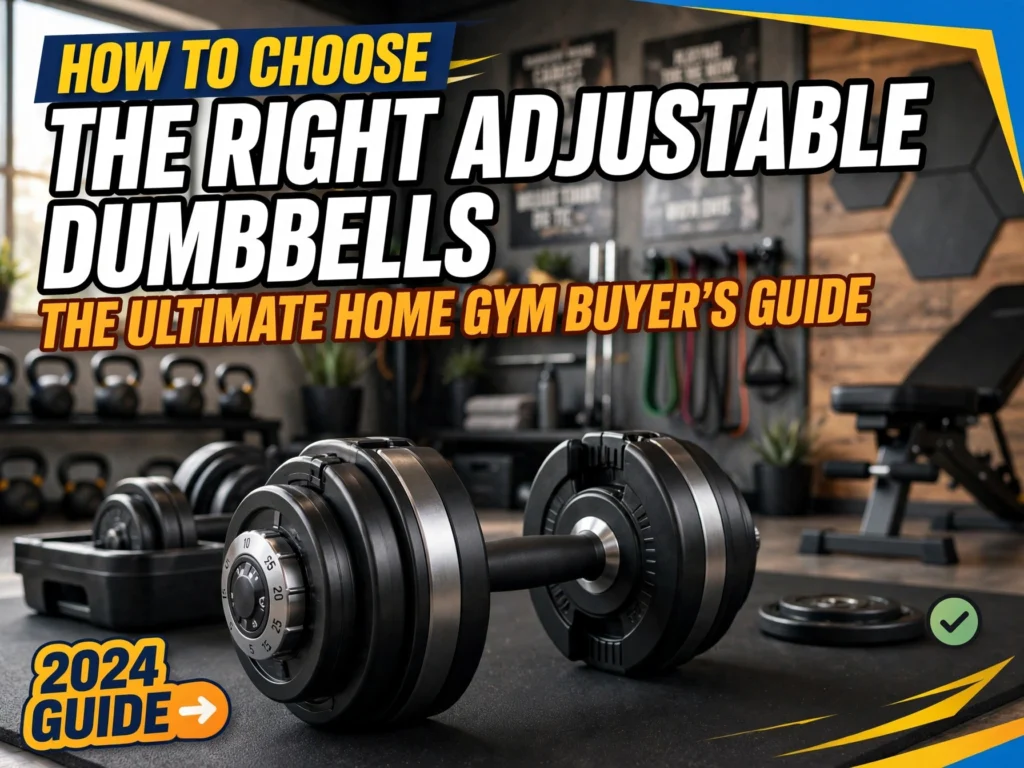
If you are building a home gym, you are going to need a set of dumbbells. They are arguably the most versatile piece of fitness equipment on the planet, allowing you to train every muscle group from your chest to your calves.
But let’s be honest: traditional dumbbells are a nightmare for home use. Buying a full rack of fixed-weight dumbbells ranging from 5 to 50 pounds will cost you a small fortune and take up half your living room. This is exactly why adjustable dumbbells have become the holy grail of home fitness.
However, the market is flooded with options, ranging from cheaply made plastic sets to heavy-duty steel masterpieces. Buy the wrong pair, and you will be dealing with awkward grips, slow adjustment times, or worse—weights that fall apart mid-workout.
In this guide, we are going to break down exactly how to choose the right adjustable dumbbells for your specific needs, budget, and fitness goals.
Why Adjustable Dumbbells Are a Game-Changer
Before we dive into the buying criteria, let’s look at why adjustable dumbbells are superior for home gyms:
- Space-Saving: One pair of adjustable dumbbells replaces 15 to 30 pairs of traditional dumbbells. They take up the same space as a shoebox.
- Cost-Effective: While a good pair might cost $200 to $500 upfront, buying that same weight range in fixed dumbbells would easily cost over $1,000.
- Convenience: You can change weights in seconds, allowing you to move quickly between supersets or transition from a heavy chest press to a light tricep workout without leaving your spot.
How to Choose the Right Adjustable Dumbbells: Key Factors
When shopping for adjustable dumbbells, you need to look at six main factors. Do not swipe your credit card until you have considered each one.
1. Maximum Weight Capacity
The first question you need to ask yourself is: How heavy do I actually need to lift?
If you are a beginner or primarily focus on toning and light fitness, a set that maxes out at 24 or 25 pounds per hand might be plenty. However, if you are an experienced lifter looking to build serious muscle mass, you will likely outgrow those quickly.
For most people, a set that goes up to 50 or 52.5 pounds per hand is the sweet spot. This allows you to do heavy goblet squats, dumbbell bench presses, and back rows for years without outgrowing them. If you are an advanced lifter, look for expandable sets that can reach 70, 90, or even 120 pounds.
2. The Adjustment Mechanism (Crucial)
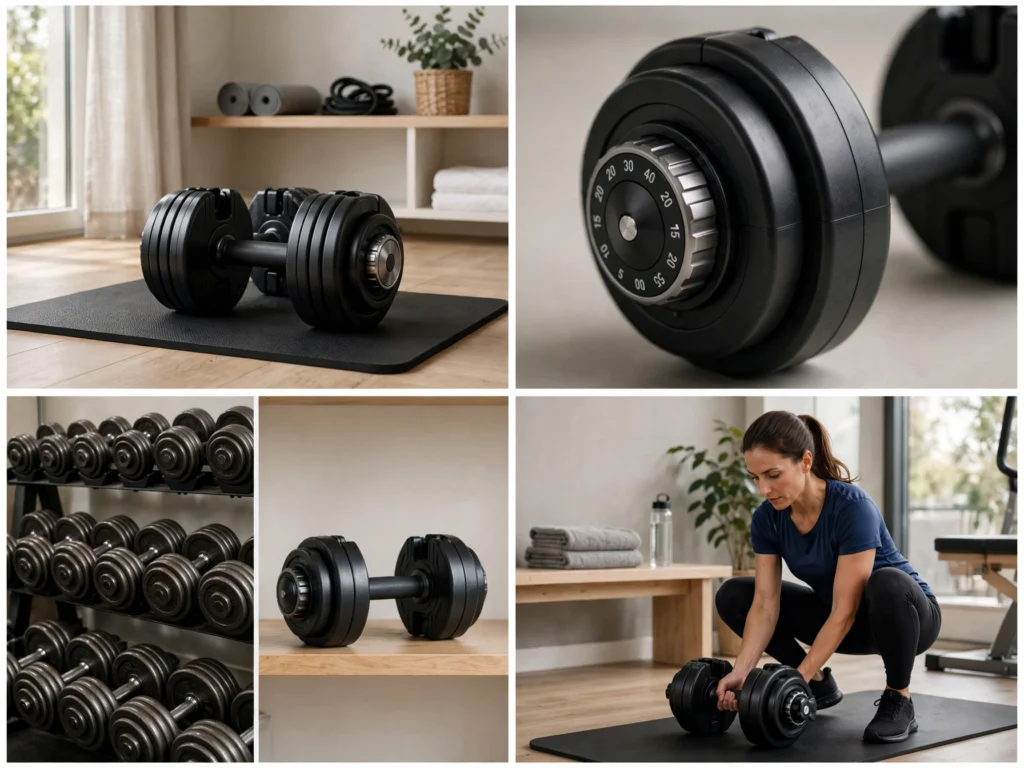
This is where adjustable dumbbells live or die. How you change the weight dictates your entire workout flow. There are three main types:
- Dial-a-Weight (Selectorized): Think PowerBlock or Bowflex SelectTech. You simply turn a dial or move a pin on the side of the dumbbell, and it grabs the exact amount of weight you need from the storage tray.
- Pros: Extremely fast and easy to change weights between sets.
- Cons: They have more moving parts, meaning more things can break over time.
- Quick-Lock / Clamp Systems: Think Ironmaster or Nüobell. You load standard weight plates onto a handle and secure them with a quick-release clamp or a twist-lock mechanism.
- Pros: Feels exactly like a traditional dumbbell. Highly durable.
- Cons: Takes slightly longer to change weights (though high-end twist-locks like Nüobell are very fast).
- Spin-Lock (Threaded): The old-school method. You slide plates onto a threaded metal bar and tighten a plastic or metal collar.
- Pros: The cheapest option. Very durable.
- Cons: Very slow to adjust. The collars can loosen during a workout, which is annoying and slightly dangerous.
3. Increment Size
How does the dumbbell progress in weight? Does it go up by 2.5 pounds, or does it jump by 5 or 10 pounds?
Progressive overload (gradually increasing your weight) is the key to building muscle. If a dumbbell jumps from 20 pounds straight to 30 pounds, you might struggle to make that leap on certain exercises like lateral raises. Look for dumbbells that offer 2.5 or 5-pound increments so you can progress smoothly.
4. Overall Length and Bulk
This is a factor many buyers overlook until the dumbbells arrive at their door.
Some adjustable dumbbells are incredibly long to accommodate all the weight plates. If you are doing an overhead tricep extension or a dumbbell bench press, excessively long dumbbells will clank into each other at the top of the movement.
Furthermore, when you are lifting a light weight (say, 10 pounds), some adjustable dumbbells still force you to hold a massive, bulky handle because the empty cradle is still attached. Look for compact designs, like PowerBlocks, which stay relatively short even at max weight.
5. Durability and Build Material
Let’s get one thing straight: Never drop adjustable dumbbells. Unlike commercial gym dumbbells, adjustable ones have internal mechanisms, plastic trays, or moving locks that will shatter if dropped.
That said, you still want a durable set.
- Plastic components: Keep the weight down and are cheaper, but they can crack if mishandled.
- All-metal construction: Heavier to ship and more expensive, but they will last a lifetime. If you plan to use these dumbbells intensely for years, opt for metal over plastic wherever possible.
6. Price and Warranty
Adjustable dumbbells generally fall into three price tiers:
- Under $150: Usually spin-lock sets or budget selectorized brands. Fine for absolute beginners, but expect lower durability.
- $200 – $400: The sweet spot. Brands like Bowflex, Yes4All, and some mid-range PowerBlocks live here. Great balance of quality and price.
- $400+: Premium sets like Ironmaster, PowerBlock Elite, or Nüobell. These are built like tanks and feel like commercial gym equipment.
Always check the warranty. A 1-year warranty is standard, but premium brands often offer 5 to 10 years, which provides serious peace of mind.
Common Mistakes to Avoid When Buying
To ensure you make the perfect purchase, avoid these common pitfalls:
- Buying Too Light: Do not cheap out on a 25-pound set just to save money. You will outgrow them in a few months, forcing you to buy a second set. Buy heavy from the start.
- Ignoring the Grip: A dumbbell handle needs to be comfortable and provide good knurling (texture) so it doesn’t slip when your hands get sweaty. Read reviews specifically mentioning the handle comfort.
- Forgetting the Storage Tray: The storage tray is essentially the “rack” for your dumbbells. Make sure the tray is sturdy. If the tray breaks, the dumbbell might not seat properly, meaning it won’t pick up the right weight.
- Assuming You Can Drop Them: Again, you cannot drop these. If your home gym has a concrete floor and you are doing heavy floor presses or cleans, you need a thick rubber mat, or you need to stick to traditional iron dumbbells.
Final Thoughts
Knowing how to choose the right adjustable dumbbells comes down to understanding your own fitness journey. If you want speed and convenience, a dial-up system is your best friend. If you want maximum durability and a traditional feel, a quick-lock plate system is the way to go.
Take the time to evaluate the weight capacity, the increments, and the overall length before making your investment. A high-quality pair of adjustable dumbbells, paired with an adjustable bench, is truly all you need to build an incredible physique from the comfort of your own home. Choose wisely, lift safely, and enjoy the incredible convenience of your new home gym!