How to Start a Mediterranean Diet (A 7-Day Beginner’s Meal Plan)
Introduction
The Mediterranean diet isn’t just another passing trend—it’s a way of eating that has been ranked the top overall diet for nine consecutive years . Rooted in the traditional eating patterns of countries bordering the Mediterranean Sea, this approach emphasizes plant-based foods, healthy fats, and a relaxed, enjoyable relationship with meals.
But how do you actually start? The Mediterranean diet can seem overwhelming at first, especially with all the myths and misinformation circulating about what it really involves. The truth is, it’s a flexible, sustainable lifestyle built around nourishing foods, balance, and habits that are realistic to maintain long-term .
In this guide, we’ll debunk common myths about the Mediterranean diet, explain the food pyramid that guides this way of eating, and provide you with a complete 7-day meal plan to get started. We’ll also answer frequently asked questions and suggest how to find more specialized information.
Myth 1: The Mediterranean Diet Is a Strict, Restrictive Plan
Many people assume the Mediterranean diet comes with rigid rules and complicated serving sizes. In reality, it’s more of an eating lifestyle than a strict “diet” . The Greek root word of “diet” is “diaita,” which means “to live one’s life” .
The Truth: There are no strict rules or special recipes you must follow. As Walter Willet, chair of the Department of Nutrition at the Harvard School of Public Health, explains, “By paying attention to healthy ingredients rather than specific recipes, anyone can adapt this plan to their own tastes” .
The Mediterranean approach is flexible—it’s about making mindful food choices most of the time, not perfection at every meal .
Myth 2: All Mediterranean Diets Are the Same
A common misconception is that there’s one single “Mediterranean diet.” The reality is far more diverse. The area surrounding the Mediterranean Sea varies significantly in climate, and the food grown there differs considerably across regions .
The Truth: A diet in Greece was different from the foods consumed in Spain, Italy, or Lebanon—yet people in each of these regions followed a “Mediterranean diet” . The core principles remain consistent, but the specific foods adapt to local availability and cultural traditions.
Today’s application of this nutritious routine is broader still, making it adaptable to an array of cuisines and cultures worldwide .
Myth 3: The Mediterranean Diet Is Expensive and Hard to Follow
Some assume that eating Mediterranean means buying expensive imported ingredients or spending hours in the kitchen. The 7-day meal plan in this guide is specifically designed to require no more than 30 minutes of active cooking time .
The Truth: Simple, whole foods form the foundation of this eating style. The updated Mediterranean diet pyramid emphasizes local, seasonal, and minimally processed foods while discouraging food waste . This approach can actually help you save money by focusing on affordable staples like beans, lentils, whole grains, and seasonal produce.
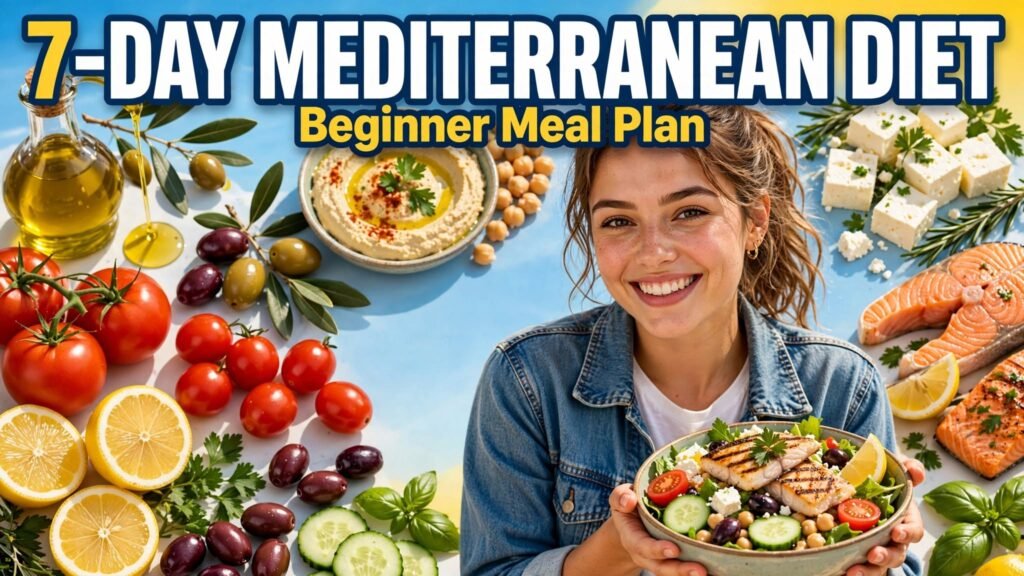
The Mediterranean diet emphasizes plant-based foods, including fruits, vegetables, whole grains, legumes, and extra-virgin olive oil at its foundation .
The Mediterranean Diet Food Pyramid: Your Visual Guide
The Mediterranean Diet Pyramid is a simple visual guide to eating well with balance and variety . First published in the 1990s, the pyramid has been updated several times, most recently with sustainability in mind .
Foundation: Foods for Every Meal
At the base of the pyramid, we find the cornerstone foods to include at every meal:
- Vegetables: 2 portions daily, with a variety of colors, both raw and cooked
- Whole grains: 1–2 portions of bread, pasta, rice, or other grains (ideally whole-grain)
- Olive oil: A staple ingredient for cooking or dressing your meals
- Fruit: At least 1 portion with each meal
Following this foundation makes it simple to hit your daily targets for nutrients and fiber .
Daily Staples
Next on the pyramid are foods to include every day:
- Dairy: 2 servings, such as yogurt or cheese
- Nuts and seeds: A handful a day (about 30 grams)
- Beans, peas, and lentils: Fantastic plant-based protein sources that form the base of many traditional Mediterranean dishes
Weekly Proteins
Animal proteins feature within dishes rather than being the main ingredient:
- White meat: 2 portions per week
- Fish and seafood: 2–3 portions per week
- Eggs: 2–4 per week
- Red meat: In small amounts, just 1–2 portions per week
The Tip of the Pyramid
Foods high in sugar make up the smallest part of the diet .
Myth 4: The Mediterranean Diet Doesn’t Really Work
Recent media reports have questioned whether research supporting the Mediterranean diet was reliable. A landmark 2013 study from Spain (the PREDIMED trial) was retracted due to randomization concerns at some study sites .
The Truth: Researchers re-analyzed the data using statistical methods that didn’t depend on randomization—and the original findings held. Both arms of the Mediterranean diet (supplemented with olive oil or nuts) still reduced cardiovascular events compared to a low-fat diet .
The research showed that it wasn’t about calories or intake—it was the use of healthy fats that seemed to be helpful and protective. Neither Mediterranean group was calorie-restricted, yet participants still experienced significant benefits .
The Mediterranean diet is strongly associated with lower cardiovascular disease risk, and a recent study found that a urinary signature of Mediterranean diet polyphenols was associated with a 52% reduced risk of cardiovascular disease in the highest adherence group .
7-Day Mediterranean Diet Meal Plan for Beginners
This plan follows the principles of the Mediterranean diet, with modifications for different calorie needs .
Day 1
Daily Totals: ~1,800 calories | 87g fat | 98g protein | 175g carbs | 35g fiber
Breakfast (452 calories):
Protein Oatmeal with fruit and nuts
Lunch (410 calories):
Cucumber-Hummus Wrap with vegetables
Dinner (511 calories):
Lemony Garlic Salmon with roasted vegetables
Snack:
¼ cup unsalted dry-roasted almonds + 1 clementine
Day 2
Daily Totals: ~1,798 calories | 87g fat | 73g protein | 202g carbs | 47g fiber
Breakfast (409 calories):
Best Gut-Healthy Breakfast (yogurt, berries, and chia seeds)
Lunch (483 calories):
Cottage Cheese Veggie Jar with vegetables
Dinner (471 calories):
Chickpea Caesar Salad
Snack:
1 serving Apple with Cinnamon Almond Butter
Day 3
Daily Totals: ~1,793 calories | 82g fat | 94g protein | 185g carbs | 31g fiber
Breakfast:
Berry and Nut Oatmeal
Lunch:
Chopped Broccoli Chickpea Salad
Dinner:
Black Bean Fajita Casserole
Day 4
Daily Totals: ~1,800 calories | 89g fat | 93g protein | 179g carbs | 39g fiber
Breakfast:
Greek Yogurt with Berries and Honey
Lunch:
Shrimp Pesto Quinoa Bowl
Dinner:
Lemon-Pepper Chicken & Veggies
Day 5
Daily Totals: ~1,805 calories | 93g fat | 83g protein | 215g carbs | 37g fiber
Breakfast:
Whole-Grain Toast with Avocado
Lunch:
White Bean & Spinach Orzo
Dinner:
Kale Sweet Potato Chicken Salad
Day 6
Daily Totals: ~1,824 calories | 85g fat | 83g protein | 204g carbs | 46g fiber
Breakfast:
Lemon-Blueberry Smoothie
Lunch:
High-Protein Black Bean Salad
Dinner:
Spicy Coconut Chicken and Mushroom Soup
Day 7
Daily Totals: ~1,825 calories | 67g fat | 93g protein | 239g carbs | 53g fiber
Breakfast:
Raspberry Peanut Butter Overnight Oats
Lunch:
Chickpea Soup with Chicken
Dinner:
Crispy Salmon Rice Bowl
Myth 5: You Have to Give Up All Your Favorite Foods
The Mediterranean diet isn’t about deprivation. It encourages trying new ingredients and enjoying flavors from around the world .
The Truth: In this approach, variety comes to life with dishes from many cuisines. The plan includes dishes like fajita-chicken stuffed peppers, Italian wedding soup, and roasted root vegetables over spiced lentils—proving that healthy eating doesn’t have to be boring .
The updated Mediterranean diet pyramid by SINU emphasizes plant-based foods while allowing moderate consumption of dairy, white meats, and eggs . The Mediterranean diet can be adapted to work for any cuisine and culture .
Scientific Benefits of the Mediterranean Diet
The Mediterranean diet has been linked to numerous health benefits:
Heart Health
The diet is strongly associated with lower cardiovascular disease risk. Studies show that polyphenols derived from the Mediterranean diet are associated with improved cardiovascular outcomes .
Reduced Chronic Disease Risk
Evidence links adherence to the Mediterranean diet with a reduced risk of chronic diseases, including type 2 diabetes and metabolic syndrome .
Bone Health
Rich in fruits, vegetables, whole grains, legumes, nuts, and olive oil, the Mediterranean diet provides bioactive compounds essential for bone metabolism. Evidence suggests an inverse association between adherence to the Mediterranean diet and fracture risk .
Weight Management
The Mediterranean diet has consistently earned top marks for weight loss. It’s a sustainable lifestyle built around nourishing foods and realistic habits .
Myth 6: The Mediterranean Diet Is Carb-Heavy and Fattening
While the Mediterranean diet includes carbohydrates from whole grains, fruits, and vegetables, it emphasizes quality over quantity. This is a common misconception .
The Truth: Research shows that the Mediterranean diet reduces carbohydrate intolerance . A key aspect is the inclusion of healthy fats—not the elimination of carbs. The focus is on whole, unprocessed foods rather than refined carbohydrates.
The Mediterranean people consumed whole grains that were truly whole. For thousands of years, about 90% of the cereal grain grown and consumed in the Mediterranean region was whole, unprocessed barley .
Frequently Asked Questions
Q: Can I follow the Mediterranean diet on a budget?
A: Yes. The diet emphasizes affordable staples like beans, lentils, seasonal vegetables, and whole grains. Buying in bulk and choosing local produce can help save money .
Q: Do I need to drink wine on the Mediterranean diet?
A: No. While moderate wine consumption is part of the traditional Mediterranean pattern, it’s optional. The Mediterranean diet pyramid advocates limiting alcohol due to its links with chronic diseases .
Q: Can vegetarians and vegans follow the Mediterranean diet?
A: Absolutely. The updated Mediterranean diet pyramid places greater emphasis on plant-based foods and encourages reduced consumption of animal-based products. Plant proteins like beans, lentils, and nuts form the foundation of many dishes .
Q: Is the Mediterranean diet safe for everyone?
A: The Mediterranean diet is generally safe for most healthy adults. However, if you have specific health conditions or concerns, consult a healthcare provider before making significant dietary changes.
Q: How soon will I see results?
A: Benefits can begin relatively quickly. Many people notice improved energy levels and digestion within the first few weeks. Long-term health benefits like improved heart health and reduced chronic disease risk accumulate over time with consistent adherence .
Conclusion
The Mediterranean diet is more than just a way of eating—it’s a sustainable lifestyle built around nourishing foods, balance, and habits that are realistic to maintain long-term . By focusing on plant-forward meals, healthy fats, and enjoyable eating experiences, you can support your health while actually loving what you eat.
The 7-day meal plan provided here is designed to be simple and practical, requiring no more than 30 minutes of active cooking time . Start with small changes, experiment with new flavors, and remember: the Mediterranean diet is flexible and adaptable to your preferences and needs.
For deeper insights into how the Mediterranean diet can support your health goals, explore our article on the health benefits of the Mediterranean diet or learn more about the Mediterranean diet food pyramid.