The Ultimate Guide: How to Calculate Your Macros for Muscle Gain
Have you ever heard the famous fitness saying, “You can’t out-train a bad diet”? It is the absolute truth. You can spend hours in the gym lifting heavy weights, but if you are not fueling your body correctly, your muscle gains will stall.
When it comes to building muscle, calories matter—but where those calories come from matters even more. That is where macronutrients, or “macros,” come into play. If you are tired of guessing what to eat and want a structured, science-backed approach to growing your muscles, you are in the right place.
In this comprehensive guide, we will break down exactly how to calculate your macros for muscle gain. No confusing jargon, no outdated bro-science—just simple, actionable steps you can start using today.
What Are Macros and Why Do They Matter?
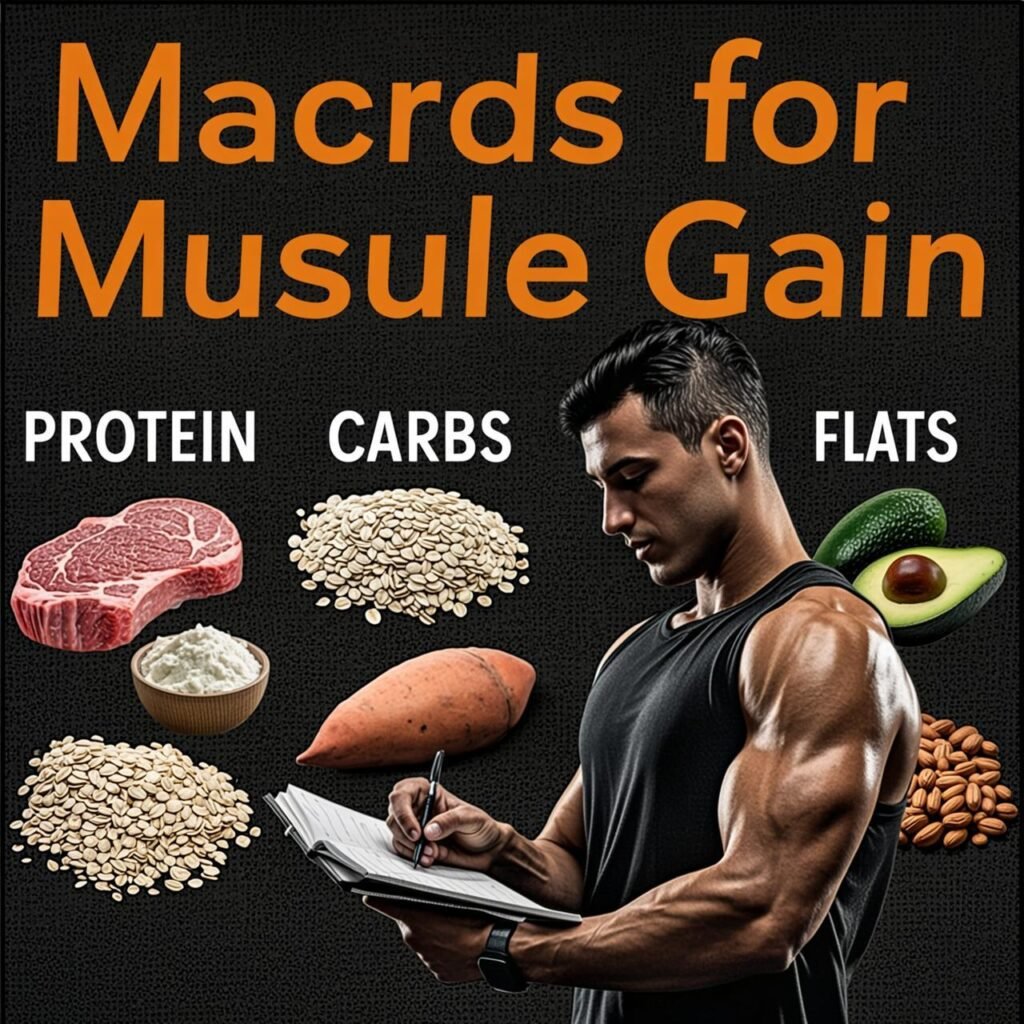
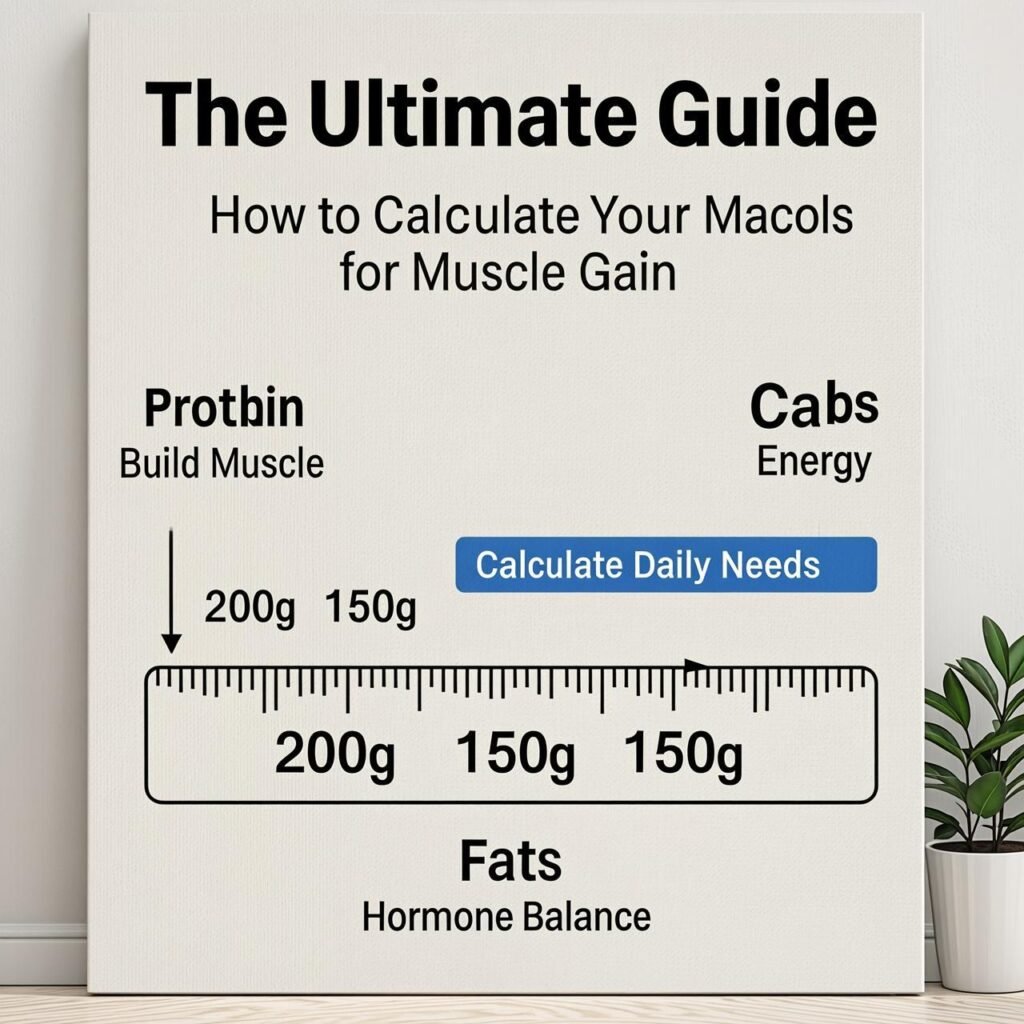
Before we dive into the math, let’s quickly cover the basics. “Macros” is short for macronutrients. These are the three main nutrients your body needs in large amounts to survive and thrive:
- Protein: The building block of muscle tissue. Without adequate protein, your body cannot repair the muscle fibers you tear down during workouts.
- Carbohydrates: Your body’s primary energy source. Carbs fuel your workouts and replenish your glycogen stores, allowing you to lift heavier and recover faster.
- Fats: Essential for hormone production (like testosterone), joint health, and overall cellular function.
If you want to build muscle efficiently, you need the right balance of these three nutrients. Eating random amounts of food might lead to weight gain, but it won’t necessarily lead to muscle gain.
Step 1: Calculate Your Maintenance Calories (TDEE)
You cannot calculate your macros without knowing how many calories you burn in a day. This is known as your Total Daily Energy Expenditure (TDEE).
To find your TDEE, you first need to calculate your Basal Metabolic Rate (BMR)—the number of calories your body burns at rest just to keep you alive. The most accurate formula for this is the Mifflin-St Jeor equation:
- Men: BMR = (10 × weight in kg) + (6.25 × height in cm) – (5 × age in years) + 5
- Women: BMR = (10 × weight in kg) + (6.25 × height in cm) – (5 × age in years) – 161
Once you have your BMR, multiply it by an activity factor to get your TDEE:
- Sedentary (desk job, little to no exercise): BMR × 1.2
- Lightly active (light exercise 1-3 days/week): BMR × 1.375
- Moderately active (moderate exercise 3-5 days/week): BMR × 1.55
- Very active (hard exercise 6-7 days/week): BMR × 1.725
- Extra active (very hard exercise/physical job): BMR × 1.9
The resulting number is the number of calories you need to consume daily to maintain your current weight.
Step 2: Add a Caloric Surplus for Muscle Gain
To build muscle, you must be in a caloric surplus. This means you need to eat more calories than you burn. If you eat at maintenance, you will just stay the same size. If you eat in a deficit, you will lose weight (and likely muscle).
However, more is not always better. Eating 1,000 extra calories a day will not make you build muscle faster; it will just make you gain a massive amount of body fat.
The golden rule for lean bulking is to add a 300 to 500 calorie surplus to your TDEE.
- Example: If your TDEE is 2,500 calories, your muscle-building calorie goal should be between 2,800 and 3,000 calories per day.
Start with a 300-calorie surplus. Monitor your progress for two to three weeks. If the scale isn’t moving and your lifts aren’t getting stronger, bump it up by another 100-200 calories.
Step 3: Calculate Your Macros for Muscle Gain
Now for the main event. We are going to divide your total daily calories into protein, fats, and carbohydrates.
(Note: For the math below, remember that 1 gram of protein = 4 calories, 1 gram of carbs = 4 calories, and 1 gram of fat = 9 calories).
1. Protein (The Muscle Builder)
Protein is the most critical macro for muscle gain. The scientific consensus for muscle hypertrophy (growth) suggests eating between 0.8 to 1.1 grams of protein per pound of body weight.
If you are significantly overweight, use your lean body mass or your target body weight instead of your current weight to avoid eating excessive protein.
- Rule of thumb: 1 gram of protein per pound of body weight.
- Example: If you weigh 160 lbs, you need 160 grams of protein.
- Calories from protein: 160g × 4 = 640 calories.
2. Fats (The Hormone Optimizer)
Dietary fat is crucial for keeping your hormones balanced, especially testosterone, which plays a massive role in muscle building. You should aim for 0.3 to 0.4 grams of fat per pound of body weight.
- Rule of thumb: 0.35 grams of fat per pound of body weight.
- Example: If you weigh 160 lbs, you need 56 grams of fat (160 × 0.35).
- Calories from fat: 56g × 9 = 504 calories.
3. Carbohydrates (The Workout Fuel)
Carbs are the unsung heroes of muscle gain. They provide the explosive energy needed to push through heavy squats and deadlifts. There is no strict rule for carbs per pound of body weight. Instead, carbs make up the remaining calories in your daily budget.
- Total daily calorie goal (from our example): 2,900 calories.
- Calories used by protein and fat: 640 + 504 = 1,144 calories.
- Remaining calories for carbs: 2,900 – 1,144 = 1,756 calories.
- Grams of carbs: 1,756 ÷ 4 = 439 grams of carbs.
Your Final Macro Blueprint (Example)
For a 160-pound person with a TDEE of 2,500 calories who wants to build muscle:
- Total Daily Calories: 2,900
- Protein: 160g (640 calories)
- Fats: 56g (504 calories)
- Carbs: 439g (1,756 calories)
Best Food Sources for Each Macro
Knowing your numbers is only half the battle. To actually see results, you need to source your macros from high-quality, nutrient-dense foods.
High-Quality Protein Sources:
- Chicken breast and thighs
- Lean beef (steak, ground beef)
- Fish (salmon, tuna, tilapia)
- Eggs and egg whites
- Greek yogurt and cottage cheese
- Whey protein powder (for convenience)
High-Quality Carbohydrate Sources:
- Oatmeal and whole-grain cereals
- Rice (white and brown)
- Potatoes and sweet potatoes
- Whole wheat pasta and bread
- Fruits and vegetables (do not skip these for micronutrient intake!)
High-Quality Fat Sources:
- Avocados
- Nuts (almonds, walnuts, cashews)
- Seeds (chia, flax, pumpkin)
- Olive oil and avocado oil
- Natural peanut or almond butter
Common Muscle-Building Mistakes to Avoid
Even with the perfect macro calculations, people often stumble over a few common hurdles. Keep these in mind:
- Inconsistency: Hitting your macros on Monday but missing them on Thursday will halt your progress. Consistency over weeks and months is what builds muscle.
- Fearing Carbs: Thanks to old diet trends, many people are scared of carbohydrates. If you want to build muscle, you need carbs. Embrace them.
- Dirty Bulking: Thinking “a calorie is a calorie” and eating fast food to hit your macros. You will gain weight, but it will be mostly fat, and you will feel sluggish in the gym.
- Not Tracking Accurately: Eyeballing a tablespoon of peanut butter can easily add 200 extra calories to your day. Use a digital food scale and an app like MyFitnessPal or Cronometer for the first few months.
Final Thoughts
Learning how to calculate your macros for muscle gain takes the guesswork out of your diet. By finding your TDEE, adding a slight caloric surplus, and dividing those calories into optimal amounts of protein, fats, and carbs, you are setting yourself up for success.
Remember, this is a starting point. Everyone’s metabolism is slightly different. Track your progress for 3 to 4 weeks. If you are gaining about 0.5 to 1 pound per week and getting stronger in the gym, your macros are dialed in perfectly. If you are gaining weight too fast, slightly lower your carbs. If the scale isn’t moving, add a few more carbs or fats.
Be patient, stay consistent, train hard, and let the food do the heavy lifting of growing your muscles. You’ve got this!