How to Start a Mediterranean Diet on a Budget: The Ultimate Guide
Let’s be honest: whenever we hear the phrase “Mediterranean diet,” most of us immediately picture expensive extra virgin olive oil, fresh wild-caught salmon, and organic artichokes imported straight from Italy. It sounds like a luxury lifestyle reserved for people with unlimited grocery budgets.
But what if I told you that the real Mediterranean diet— the way people actually eat in countries like Greece, Italy, and Spain—is historically a peasant diet? It’s built on humble, inexpensive, and filling ingredients like beans, lentils, whole grains, and seasonal vegetables.
If you want to enjoy the incredible heart-health benefits, weight management, and delicious flavors of this lifestyle without emptying your wallet, you are in the right place. In this guide, I am going to break down exactly how to start a Mediterranean diet on a budget, step by step.
1. Why the Mediterranean Diet is Actually Budget-Friendly
The standard American diet relies heavily on expensive, highly processed convenience foods and massive portions of meat. The Mediterranean diet flips this on its head.
In this lifestyle, meat takes a back seat. It is used more as a flavor enhancer than the main event. Instead, the stars of the show are legumes (beans and lentils), whole grains (oats, brown rice, barley), and vegetables. Have you checked the price of a one-pound bag of dried lentils lately? It usually costs around $1.50 to $2.00 and yields about 7 cups of cooked food. That is pure, high-fiber, high-protein nutrition for pennies per serving.
By shifting your mindset from “meat-centric” to “plant-centric,” you will naturally slash your grocery bill in half.
2. Step 1: Master the Budget-Friendly Mediterranean Pantry
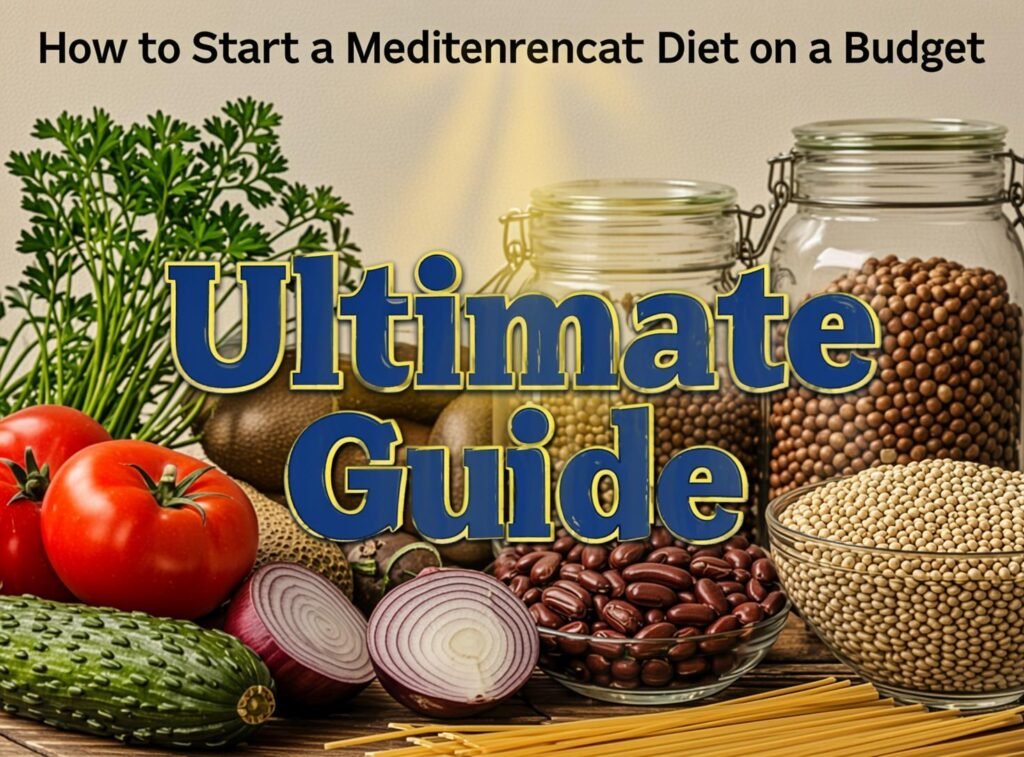
The secret to eating well on a budget is building a foundation of shelf-stable foods. When you have a well-stocked pantry, you only need to buy a few fresh items each week to create complete meals. Here is what you should always have on hand:
- Dried Legumes: Lentils, chickpeas, black beans, and white beans. Dried is cheaper than canned, but if you are short on time, canned beans are still a highly affordable option. Just rinse them well.
- Whole Grains: Brown rice, whole-wheat pasta, oats, and barley. Buy these in the bulk bins for maximum savings.
- Canned Tomatoes: Diced, crushed, or whole. These form the base of countless Mediterranean soups, stews, and pasta sauces.
- Onions and Garlic: The flavor foundation of the Mediterranean. They are cheap, last for weeks, and make everything taste better.
- Potatoes and Sweet Potatoes: Often demonized by diet culture, potatoes are a Mediterranean staple. They are incredibly filling and very cheap.
3. Step 2: Rethink Your Protein Sources
If you try to eat fresh salmon three times a week, your grocery bill will skyrocket. The Mediterranean diet only calls for fish about twice a week. Here is how to get your protein without going broke:
- Embrace Canned Fish: Canned tuna, sardines, and mackerel are fantastic, budget-friendly sources of Omega-3 fatty acids. Mixed with a little olive oil, lemon, and herbs, they make incredible wraps or salads.
- Eggs are Your Best Friend: Eggs are a cheap, high-quality protein. In the Mediterranean diet, eggs are often eaten for dinner as a quick meal. Think Spanish tortillas (egg and potato frittatas) or Shakshuka (eggs poached in tomato sauce).
- Use Meat as a Garnish: Instead of a 12-ounce steak, use 2 ounces of chopped pancetta or sausage to flavor a massive pot of lentil soup. You get the meaty flavor without the meaty price tag.
- Rely on Beans: Substitute half the ground beef in your next chili or taco recipe with mashed black beans. You won’t notice a drop in flavor, but you will notice a drop in cost.
4. Step 3: Shop Smart for Produce
Fresh produce can be expensive if you aren’t careful, especially if you are buying out-of-season fruits. Here are the golden rules for buying Mediterranean produce on a budget:
- Buy Frozen: Frozen spinach, peas, green beans, and mixed berries are flash-frozen at peak ripeness, meaning they retain all their nutrients. They are drastically cheaper than fresh and you never have to worry about them going bad in the fridge.
- Shop the Seasons: In the summer, buy cheap zucchini, tomatoes, and cucumbers. In the winter, lean into cabbage, carrots, kale, and citrus fruits. Seasonal produce is always priced to sell.
- Don’t Ignore the “Ugly” Produce: Many grocery stores now sell “imperfect” produce at a deep discount. They taste exactly the same; they just look a little weird.
- Grow Your Own Herbs: Fresh herbs (like basil, parsley, and rosemary) cost $3 a pack at the store and go bad in days. Buy a small plant for the same price, put it on your windowsill, and you’ll have free herbs for months.
5. Step 4: Be Strategic with Fats and Oils
The Mediterranean diet is famous for olive oil, but high-quality extra virgin olive oil (EVOO) can be incredibly expensive.
- Buy in Bulk: If you can afford the upfront cost, buy a large tin of olive oil rather than small glass bottles. It is much cheaper per ounce. Store it in a cool, dark place to keep it fresh.
- Use Two Oils: Keep a smaller bottle of EVOO for making salad dressings and drizzling over finished dishes (where you can taste the quality). For cooking and sautéing, use a cheaper, lighter oil like regular olive oil or even canola oil.
- Get Fats from Whole Foods: You don’t just have to get your healthy fats from oil. Avocados (when on sale), walnuts, almonds, and sunflower seeds provide excellent healthy fats.
6. Sample 3-Day Budget Mediterranean Meal Plan
To show you how this all comes together, here is a simple, 3-day meal plan that costs less than $10 a day per person.
Day 1
- Breakfast: Oatmeal cooked with water, topped with a sliced banana, a spoonful of peanut butter, and a sprinkle of cinnamon.
- Lunch: “Mediterranean Tuna Salad.” Mix canned tuna with a little olive oil, lemon juice, diced celery, and chickpeas. Serve over a bed of shredded cabbage (cheaper than lettuce).
- Dinner: Lentil and vegetable stew. Simmer dried lentils with diced onions, carrots, canned tomatoes, and garlic. Serve with a slice of toasted whole-wheat bread rubbed with a raw garlic clove.
Day 2
- Breakfast: Two scrambled eggs with a handful of frozen spinach and a side of whole-wheat toast.
- Lunch: Leftover lentil stew from the night before.
- Dinner: Whole-wheat pasta tossed with canned crushed tomatoes, garlic, a pinch of red pepper flakes, and a sprinkle of feta cheese (a little goes a long way).
Day 3
- Breakfast: Greek yogurt (buy the large tub, not individual cups) topped with frozen berries and a handful of oats.
- Lunch: Leftover pasta.
- Dinner: Baked sweet potatoes stuffed with black beans, corn, diced onions, and a dollop of plain yogurt.
7. Common Mistakes That Will Blow Your Budget
- Buying Pre-Chopped Vegetables: You are paying a premium for someone else to cut your carrots or dice your onions. Take 15 minutes a week to prep your own vegetables.
- Falling for “Diet” Marketing: You don’t need to buy expensive Mediterranean-branded snacks or supplements. Stick to real, whole foods.
- Letting Food Go Bad: Food waste is the ultimate budget killer. If your vegetables are starting to wilt, roast them with olive oil and salt, or throw them into a pot of soup before they go bad.
8. Frequently Asked Questions (FAQs)
Is the Mediterranean diet expensive to follow? Not at all. While specialty items like high-end olive oil and fresh fish can be pricey, the core of the diet is made up of some of the cheapest foods on earth: beans, rice, oats, and seasonal vegetables.
Can I still eat meat on a budget Mediterranean diet? Yes! You don’t have to eliminate meat entirely. Just change your portion sizes. Use meat as a side dish or a flavor enhancer rather than the main focus of your meal. Cheaper cuts, like chicken thighs instead of breasts, are also great options.
What is the cheapest source of protein on the Mediterranean diet? Dried lentils and beans are the undisputed champions of budget protein. A one-pound bag of dried lentils costs less than $2 and provides enough protein for several meals.
9. Conclusion: Health and Wealth Can Coexist
Learning how to start a Mediterranean diet on a budget is entirely possible—it just requires a shift in how you shop and cook. By leaning heavily on pantry staples like beans, whole grains, and canned tomatoes, treating meat as a garnish, and being smart about your produce, you can eat like a Greek god on a peasant’s budget.
Remember, the Mediterranean diet isn’t just about what you eat; it’s a lifestyle. Take your time, cook at home, share your meals with family, and enjoy the process. Your heart and your wallet will both thank you.